
How to Choose the Best Indoor Plant Grow Lights for Your Home
Why Indoor Plant Grow Lights Are a Game-Changer for Home Gardeners
Indoor plant grow lights are artificial light sources designed to replace or supplement natural sunlight, giving your plants the energy they need to grow indoors — even in the darkest apartment corners.
Quick answer: What you need to know about indoor grow lights
- What they do: Emit specific wavelengths of light (400–700nm) that plants use for photosynthesis
- Best type: Full-spectrum LED lights — energy-efficient, low heat, and longest lifespan (25,000–50,000 hours)
- How long to run them: 12–16 hours per day for most plants; seedlings need up to 18 hours
- How far from plants: 6–12 inches for LEDs; at least 24 inches for incandescent bulbs
- Key metric: Aim for a Daily Light Integral (DLI) of 12+ for low-light plants, 20–30 for vegetables and fruiting plants
- Wattage rule: Plan for roughly 32 watts per square foot of growing space
If your apartment doesn’t get much natural light, your plants are likely struggling. Low light slows growth, causes leggy stems, and can eventually kill even hardy species. Rare and exotic plants are especially vulnerable.
The good news? A quality grow light can change everything. Research shows plants grown under supplemental lighting can grow 81% to 90% taller than those relying on natural light alone over a six-week period.
Whether you’re nursing a temperamental rare plant back to health or starting seedlings in a basement, the right grow light gives you control over one of the most critical factors in plant care — light.
This guide walks you through everything: light types, placement, timing, and how to avoid the most common mistakes.
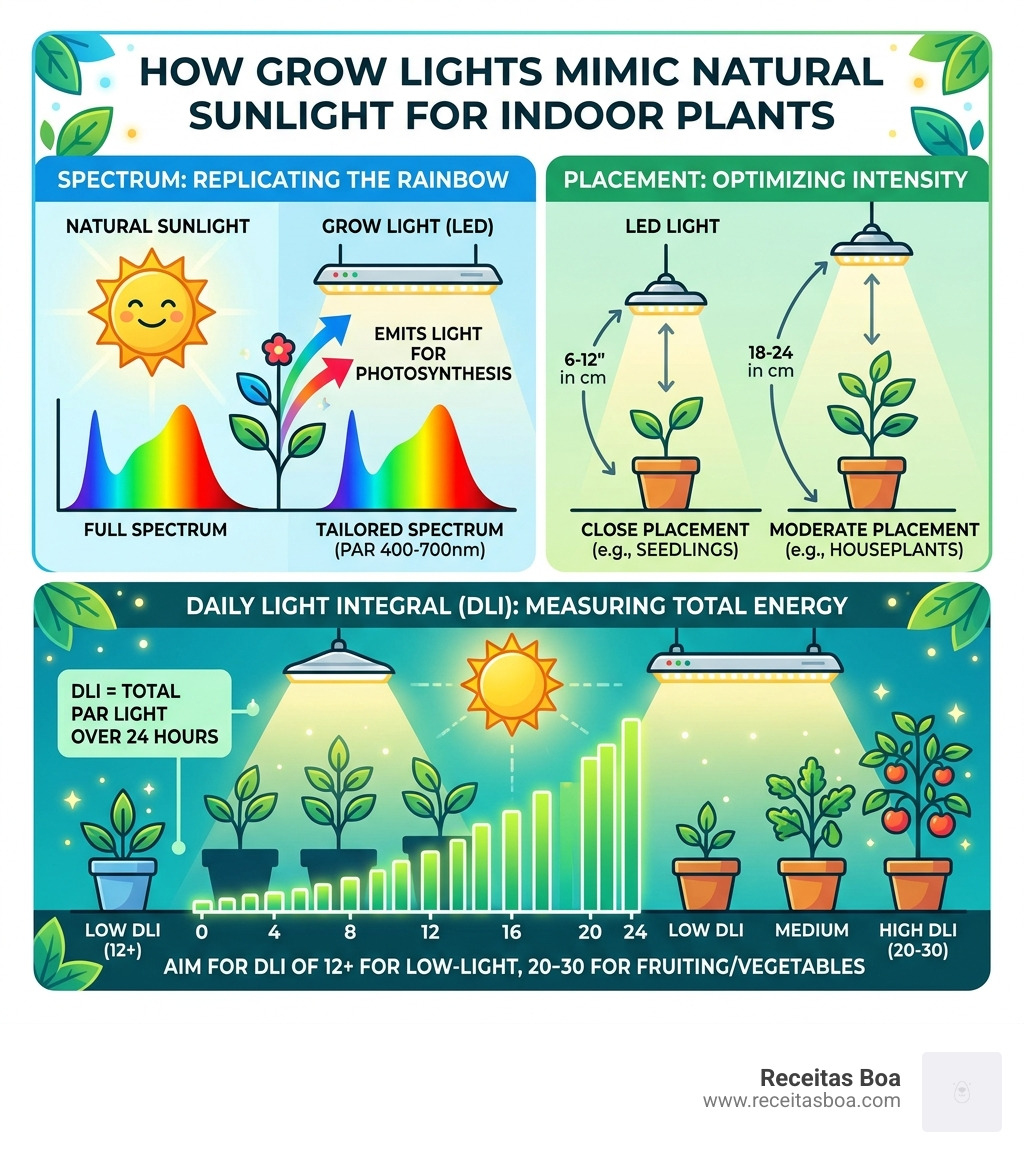
Understanding the Science: PAR, PPFD, and DLI
When we talk about indoor plant grow lights, we often hear technical terms that sound like they belong in a physics lab. However, understanding these concepts is vital if we want our rare plants to do more than just survive — we want them to thrive!
Photosynthetically Active Radiation (PAR)
Plants don’t “see” light the way we do. While we might care about how bright a room looks (lumens), plants only care about the specific wavelengths that drive photosynthesis. This range is called PAR, and it typically spans from 400 to 700 nanometers (nm).
Within this range:
- Violet/Blue Light (400–500 nm): This is the “vegetative” light. It helps plants grow strong stems and lush, green foliage.
- Red Light (600–700 nm): This is the “reproductive” light. It signals the plant to start flowering or producing fruit.
- Green Light (500–600 nm): While often thought to be useless, plants actually use green light to drive photosynthesis in deeper layers of the leaf.
Photosynthetic Photon Flux Density (PPFD)
PPFD measures how many “parcels” of light (photons) are actually hitting your plant’s leaves every second. It is measured in micromoles. Think of it like rain: PAR is the type of rain, and PPFD is how many raindrops are hitting a specific leaf. The closer the light is to the plant, the higher the PPFD.
Daily Light Integral (DLI)
DLI is perhaps the most important metric for home gardeners in 2026. It measures the total amount of light a plant receives over a full 24-hour period. It’s like a daily “calorie count” for your plants.
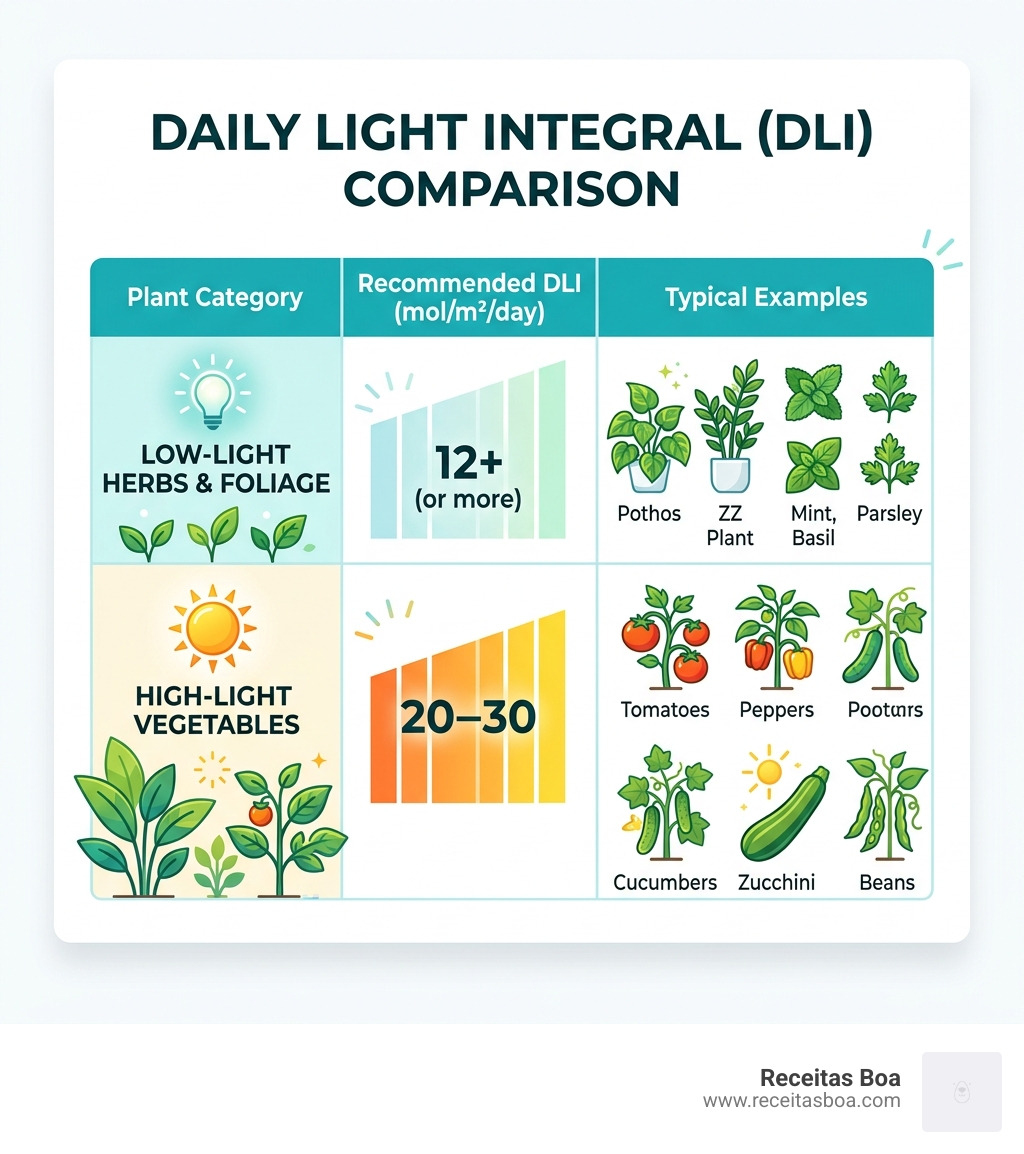
| Plant Type | Recommended DLI | Typical Examples |
|---|---|---|
| Low-Light Plants | 12 or more | Leafy greens, herbs, Pothos, ZZ plants |
| High-Light Plants | 20–30 | Tomatoes, peppers, cucumbers, garden vegetables |
At Receitas Boa, we specialize in rare plants that often thrive in lower light, but even these beauties need a consistent DLI to maintain their unique variegation and health.
Comparing Different Types of Indoor Plant Grow Lights
Not all indoor plant grow lights are created equal. Depending on your budget, space, and the specific needs of your plants, you’ll likely choose between three main categories.
1. LED Grow Lights (The Modern Standard)
LEDs (Light Emitting Diodes) are the undisputed kings of indoor gardening in April 2026. They are incredibly efficient and can last between 25,000 to 50,000 hours — that’s up to 30 times longer than old-school incandescent bulbs!
- Pros: Low heat output, customizable spectrums, and high Photosynthetic Photon Efficacy (PPE). For example, the Vego Grow Light – Full-Spectrum LED for Thriving Indoor Gardens offers a PPE of up to 1.961 µmol/J, meaning it converts electricity into usable plant light very efficiently.
- Cons: Higher upfront cost (though they save money on electricity in the long run).
2. Fluorescent Lights (Great for Seedlings)
Fluorescent tubes, specifically T5 bulbs, have been a staple for years. They generally last around 10,000 to 20,000 hours.
- Pros: Affordable, wide light distribution, and very little heat.
- Cons: Not powerful enough for high-light fruiting plants; bulbs need replacing every 12-24 months as their intensity fades.
3. Incandescent Lights (The “Budget” Choice)
We generally recommend avoiding these for serious gardening. They produce a lot of heat and very little of the light spectrum plants actually need.
- Pros: Very cheap to buy.
- Cons: High risk of burning leaves, extremely inefficient, and short lifespan.
The 32 Watts Per Square Foot Rule
A general rule of thumb for indoor gardening is to provide roughly 32 watts per square foot of growing space. However, because LEDs are so much more efficient, you can often get away with less wattage while providing more actual light to the plant.
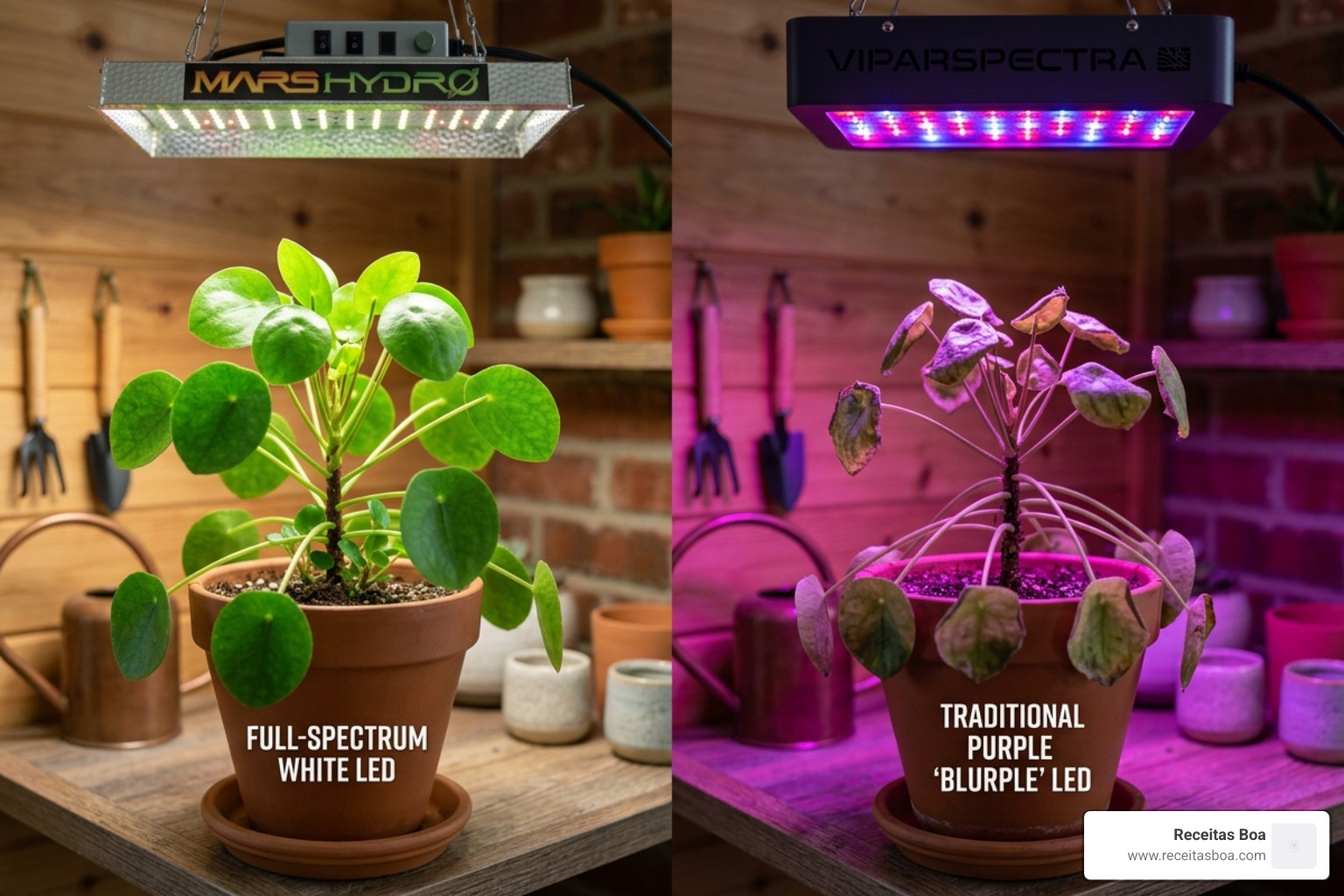
How to Position Your Lights for Optimal Health
Placement is where many beginners go wrong. If the light is too far, the plant will stretch and become “leggy” (etiolation). If it’s too close, you might literally cook the leaves.
Distance Recommendations
- LED and Fluorescent Lights: These run cool, so they can be placed 12 to 18 inches away from most houseplants. For seedlings, which need intense light to prevent stretching, you can move them as close as 2 to 3 inches (especially with fluorescents).
- Incandescent Grow Lights: Because they emit significant heat, these should be placed at least 24 inches away from any foliage.
Light Angle and Coverage
The goal is to simulate the sun, which means the light should ideally come from directly above the plant. This encourages straight, upright growth. If you use a side-clamping light, make sure to rotate your plants every few days so they don’t grow crooked.
Advanced options like the Ultimate LED Grow Light for Indoor Plants | Vego Garden allow for adjustable angles (up to 20 degrees) to minimize glare and ensure every leaf gets its fair share of photons.
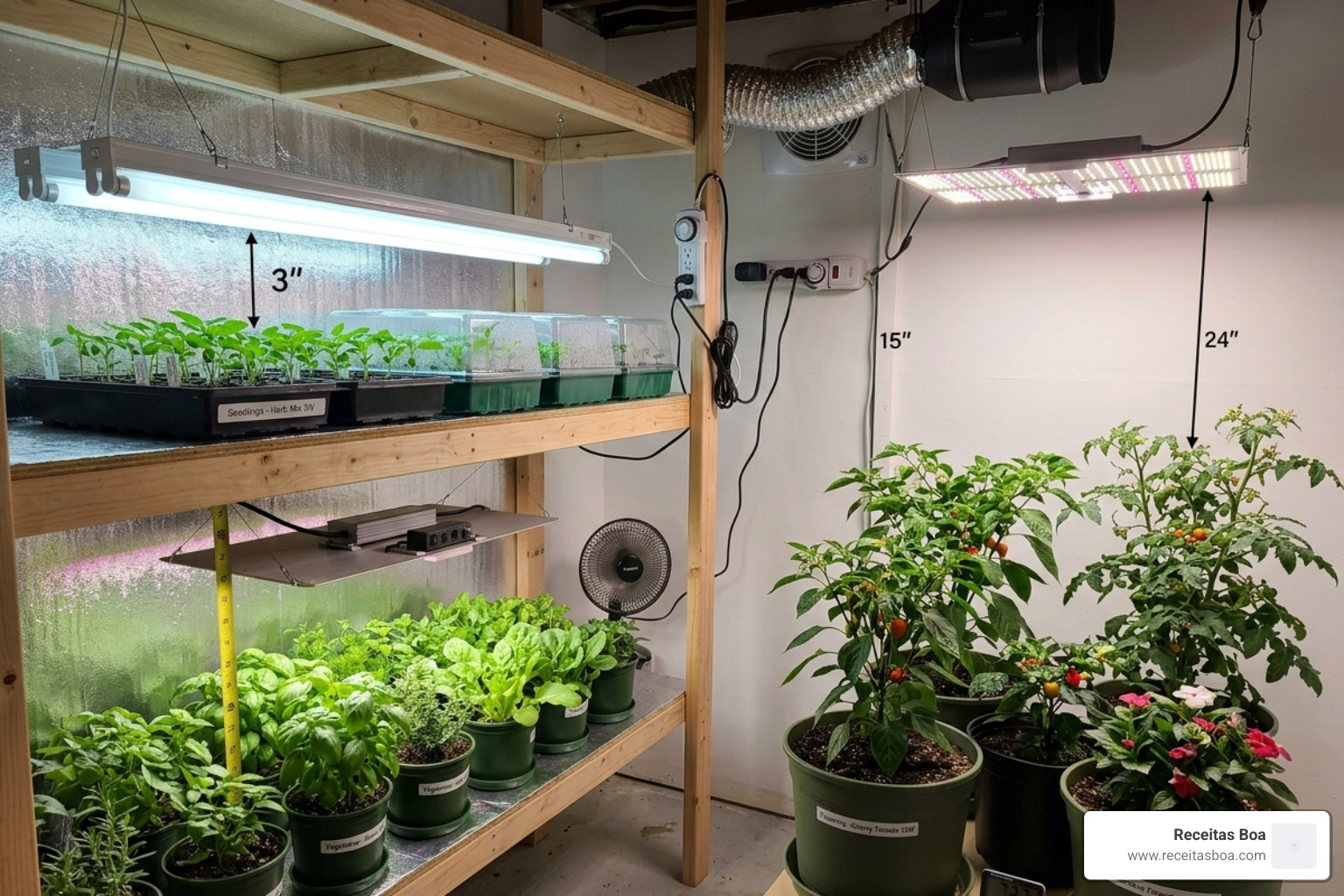
Customizing Light Cycles for Different Plant Species
Plants, much like humans, have a “circadian rhythm.” They don’t just need light; they also need rest. During periods of darkness, plants perform critical metabolic processes, like breaking down the energy they gathered during the day.
The Golden Rule: 8 Hours of Darkness
Most plants require a minimum of 8 hours of darkness every day. Running your indoor plant grow lights 24/7 will eventually stress the plant and can even lead to its death.
Recommended Light Cycles:
- Seedlings and Germination: 16 to 18 hours of light per day.
- Leafy Greens and Herbs: 12 to 14 hours of light per day.
- Flowering Plants and Vegetables: 12 to 16 hours of light per day.
- Rare Houseplants: 10 to 12 hours of supplemental light is usually sufficient if they are in a room with some natural light.
Using an automatic timer is the best way to stay consistent. Modern smart lights often come with integrated “Sleep Modes” that automatically shut off for 8 hours, mimicking a natural night cycle without you having to lift a finger.
Common Mistakes to Avoid in Indoor Gardening
Even with the best equipment, things can go wrong. Here are the most common pitfalls we see at Receitas Boa:
- Fixed Height Issues: Many gardeners set their lights and forget them. As your plant grows taller, the distance to the light decreases. If you don’t raise the light, the top leaves will eventually burn.
- Ignoring the Red-to-Blue Ratio: For general growth, a 3-to-1 red-to-blue ratio is perfect for leafy greens. However, if you’re trying to get a rare Hoya to bloom, you might need a 6-to-1 ratio to encourage those flowers.
- Poor Air Circulation: Grow lights can slightly raise the temperature around your plants. Without a small fan to circulate air, this can create a stagnant environment where fungus and pests thrive.
- Neglecting Bulb Replacement: Fluorescent bulbs might still look bright to your eyes after two years, but their PAR output drops significantly over time. Replace them every 12-18 months for best results.
- Over-lighting: More isn’t always better. If you notice leaves turning yellow, curling, or developing “bleached” spots, your light might be too intense or on for too many hours.
Frequently Asked Questions about Grow Lights
How long should I leave indoor plant grow lights on each day?
For most houseplants and vegetables, 12 to 16 hours is the sweet spot. Seedlings can handle up to 18 hours to ensure they stay stocky and strong. Always remember to provide at least 8 hours of total darkness to allow the plant to “breathe” and process energy.
What is the best spectrum for indoor plant grow lights?
A “full spectrum” light is generally the best choice for home use. This mimics natural sunlight and includes a balance of blue (for leaves) and red (for flowers). Look for a light with a Correlated Color Temperature (CCT) between 3000K (warm/reddish) and 5000K (cool/blueish). A CCT of around 4000K is often considered the perfect “all-purpose” light for indoor gardens.
Can I use regular LED bulbs instead of grow lights?
Technically, yes, a regular LED bulb will provide some light, but it isn’t efficient for photosynthesis. Regular household bulbs are designed for human eyes, focusing on the yellow and green parts of the spectrum. Indoor plant grow lights are specifically engineered to provide high concentrations of blue and red wavelengths that plants need to create food. You’ll see much faster, healthier growth with a dedicated grow bulb.
Conclusion
Choosing the right indoor plant grow lights doesn’t have to be a daunting task. By focusing on full-spectrum LEDs, maintaining the right distance, and respecting the plant’s need for a dark rest period, you can turn any corner of your home into a thriving oasis.
At Receitas Boa, we believe that everyone should be able to enjoy the beauty of rare plants, regardless of how many windows their home has. With modern technology, we can simplify care for even the most “difficult” species, ensuring they thrive in low-light conditions year-round.
Ready to transform your indoor garden? Simplify your rare plant care today and give your greenery the light it deserves!
